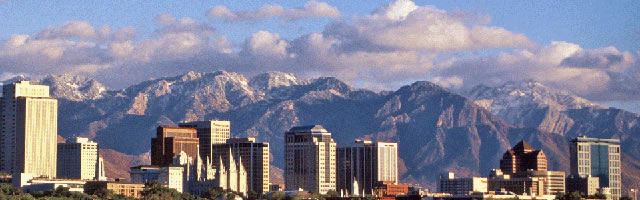
Chris Tanseer grew up in Greensboro, North Carolina. He received a BA from the University of North Carolina at Asheville and an MFA in poetry from George Mason University. Currently, he lives in Salt Lake City, UT, where he is a PhD candidate in Literature & Creative Writing at the University of Utah. He serves as an editorial assistant at Sugar House Review. Recent poems have appeared or are forthcoming in Best New Poets 2012, The Journal, Mid-American Review, Nimrod, RHINO, Subtropics, and Western Humanities Review.
Poems
A sampling of poems that have been published previously in journals.
CERTAINTY
And then July left them with each other
And the warm rain, which doused everything
They touched until no one could be sure
Whether this drowning resided in the object
Or the hands, the body,
The breath of the person touching.
A white sheen smeared across the mountains.
And they shone, but gave no light at evening
When the men from the factory left for work,
To build what was not yet built. And the mountains
Continued in their white absorption when the men
Returned and the women woke to greet them.
No one mistook the mountains. Not the workers,
Not their wives, and not the man
Who sat watching them from his porch, while out back
His wife fed the hibiscus her mix of shortening,
Flour, butter, and molasses, which she also fed
To the crickets inside who would emerge at dusk
In the cracks of the walls and baseboards
When she’d start to sing quietly to herself, her husband
On the porch intent on something far away,
Something he was sure would feel like smoke
If he could ever touch it. As for the mountains’ light,
It survived at a height he could not understand
Unless this understanding of absence suffices
For what his hands won’t grasp,
For what his heart was not designed for—
Understanding without attachment.
So at night, when the man looks outside his window
And sees the movement of people, which he sees
As the movement of ideas and of pain and of love,
As it shuffles mute to work or home
Or to the market for beans and pork and milk,
He sits remembering how there was a time
He had been certain what he touched could overcome
The pain he felt when holding it.
Originally published in The Journal (Winter 2012)
Natura non facit saltum.—Charles Darwin in a letter to Asa Gray*
*“Nature does not move by jumps.” This letter that Darwin wrote to Gray is one of the two documents written by Darwin that were presented in 1858 at the Linnaean Society meeting—along with a paper by Alfred Russel Wallace—where the theory of evolution by natural selection was first announced publicly.
Originally published in Subtropics, Issue 8 (Spring/Summer 2009)
Dusk
Jay bird squawks so daddy goes to get his shotgun—& mother wants nothing to do with any of it—it’s getting late—sun’s just over the barn’s wind vane & my sister’s coming back from the neighbor’s house—or so I remember it in a dream, but my father doesn’t own a shotgun, just a pistol I hear him talk about now & then, & that barn was our neighbor’s, only my sister is still coming home, but she’s taking her time, a squawking jay but I don’t think so. She’s up in Wisconsin now & works on a farm picking tomatoes & in the winter lettuce & I’d agree she’s lost if I thought any of us had some place to head. We’re all feet & so we just keep going—away, which is a way, the only way if it’s best not to look back on that day at the house daddy got out his gun & went to chase down that jay, my sister looking out the window at rows of burley tobacco across the way like it’s something & mom, beside herself, took the pills & he shot the bird & ever since my sister & I have been trying to figure out if we lost two or gained nothing.
Originally published in The Journal (Winter 2012)
Poem for My Father, Who Has Less to Say Now
The two old oaks on Battery Park next to the New French Bar Café
Had died some years back, but, since there was no money in it,
No one ever took them down.
Elsewhere in this city, the city you abandoned long ago that I’m growing to know
Less each day until soon it will be altogether a different city,
Things grow at such astonishing paces. For instance,
And though I’ve asked it not to, each night at my house on the city’s outskirts,
Silence has come to perch. It watches my back and
Runs its cool eyes up my shirt.
Elsewhere a woman I am trying to fall out of love with,
So think about daily, settles into an easy chair on her sun porch to go over bills,
But, at the sharp cry from the marsh out back,
Goes silent, places the envelopes back down—
December and the pair of sandhill cranes has returned.
She watches for a moment, then turns to browse summer catalogs:
Patio furniture, concrete ducks, sundials.
In the 4th grade, Michelle Wright would challenge me to stay quiet for 15 seconds,
Then 30, 45, up to a minute,
And I did it because I was in love, thought this was love and thought
My silence would prove me worthy.
Enough of this, I want to tell you a story now, a story
Of how two people navigate from silence to noise and, on arrival,
Think themselves unbearable,
So turn back—
How that silence feels in the hand and how, when they try to share it,
It grows wings and flies into the whiteness on the boughs of a winter pine.
But I’ve said too much already.
Someone, a long time ago, believed the cranes,
When keeping sentry-duty in the night, held little stones in their claws
To ward off sleep. When they sensed danger, they made a loud cry
And dropped their stones to warn the others.
And that person told someone who told someone else
Until the story was told enough to make it true, and when my mother dies
And when you die, separately, in separate houses,
Where even the lawn ornaments want nothing to do with each other,
As you both slowly, unswervingly repossess everything you’ve ever given,
Separate is the one vow you’ll keep.
The rafters spoke it at your wedding. Your best man
Had to carry you from the banquet hall to the hotel, while,
In your unending need for company,
You had asked the bridal party out for drinks.
It’s taken old age for you to realize that the quiet at a dinner table is not
How fear creeps into a house.
But we never tried to understand each other, so we failed
At nothing. We got over courtesies long ago.
And since it’s winter, the two oaks, still bare of leaves, still standing,
Try to tell another story about what happens to the body after we disappear into story.
And this is why, finally, someone has arrived to chop them down.
Originally published in Mid-American Review, 31.1 (Fall 2010)
Wally in the Tropics
There would be a teeming of tea times,
Tête-à-têtes in the shadowed recesses,
Much smoke and pomp and furs
And the frivolities of tropical depressions.
No Russian epic, no executive decisions.
Let the characters come back as they wish,
A dance, a ball while the day suns on,
A woman in another room
Or another world—little robin
Told you it would seem always
This way. Let love fulfill its sentence,
Locked to the noun and object,
Subjects always subject to question.
Sing a little ditty, scrape the person
Off from the pity. Outside the showcase
Of human flesh squeezed into threads,
For sale… though the bartering takes
Some learning. In the heat, the women
Wear no great gauds. Other languages
Play like a five-piece band—no one
Likes you. No one doesn’t.
Here the act takes less effort than
The desiring of it, the mustering of it up—
Early dawns the worm, grace was
Last season’s color. Some days
Are more like life than others,
Though there’s a rumor the bacteria
Gets you any which way—fatal detraction.
Originally published in Subtropics, Issue 8 (Spring/Summer 2009 as “Wallace in the Tropics”